

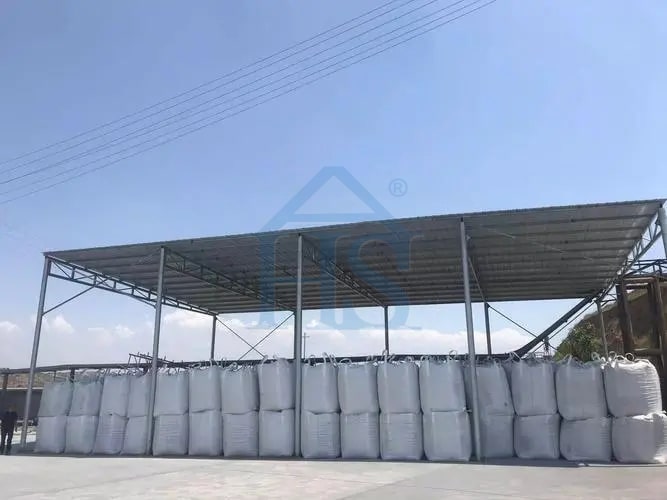
The Production Process
A produção de sílica ativa envolve três etapas principais: obtenção de matérias-primas, processando-os em uma fornalha, and collecting the Fumaça de sílica.
Matérias-primas
As principais matérias-primas utilizadas na produção de sílica ativa são o quartzo, carvão, e lascas de madeira. O quartzo é um mineral natural que contém altos níveis de dióxido de silício (SiO2). Carvão e lascas de madeira servem como agentes redutores necessários para a reação química.
A Fornalha
As matérias-primas são colocadas em um forno elétrico a arco, onde são aquecidos a temperaturas superiores a 2000°C. O calor intenso faz com que o dióxido de silício do quartzo reaja com o carbono do carvão ou das aparas de madeira., forming silicon metal and carbon dioxide (CO2). Como resultado, a gas containing silicon monoxide (SiO) is released.
Collection of Silica Fume
The gas containing SiO is rapidly cooled, causing the SiO to react with oxygen (O2) in the air and form silica fume, which is composed primarily of ultrafine silicon dioxide (SiO2) partículas. These particles are then collected using filters or other collection systems and packed for further use.

Aplicações de sílica ativa
Due to its unique properties, silica fume finds use in various applications, including concrete, materiais refratários, and others.
Silica fume is widely used as an additive in concrete to improve its strength, durabilidade, and resistance to chemical attacks. The addition of silica fume reduces the permeability of concrete, making it less susceptible to corrosion and other forms of degradation. It also enhances the mechanical properties of concrete, incluindo resistência à compressão, resistência à tracção, and flexural strength.
Silica fume is an essential component in the production of refractory materials, which are used to line high-temperature furnaces, fornos, and reactors. Its high melting point and low thermal conductivity make it an ideal material for enhancing the thermal insulation and mechanical strength of refractories.
Other Applications
In addition to concrete and refractories, silica fume is used in various other applications, como:
- Tintas e revestimentos: It improves the anti-corrosion and weather resistance properties of paint and coating systems.
- Borracha e plásticos: It enhances the mechanical and thermal properties of these materials.
- Cerâmica: It improves the strength, dureza, and thermal stability of ceramic products.
- Eletrônica: It is utilized as a filler in microelectronics packaging to provide improved thermal conductivity and electrical insulation.
Environmental Impacts
The production of silica fume involves the generation of carbon dioxide (CO2) as a byproduct of the furnace reaction. No entanto, the use of silica fume in concrete can offset these emissions by reducing the need for cement, a significant source of CO2 emissions. Além disso, recycling silica fume as a valuable material prevents it from being disposed of in landfills, thus reducing waste.


