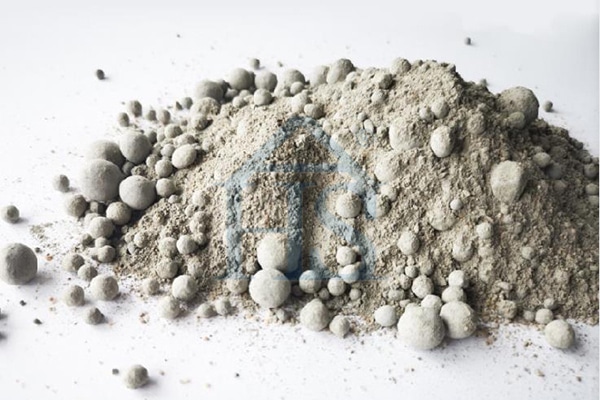
Purchasing microsilica — also known as микрокремнезем — is a high-stakes decision for any concrete producer, инженер-строитель, или менеджер по закупкам. This ultra-fine pozzolanic material can dramatically improve compressive strength, уменьшить проницаемость, and extend the service life of concrete structures. But not all microsilica is equal. Variability in Sio₂ Content, Распределение частиц по размерам, moisture levels, and supply chain reliability can make the difference between a high-performance mix and a costly failure on site.
Before you sign a purchase order, arm yourself with the right questions. The following ten questions will help you evaluate any microsilica supplier with confidence — whether you’re sourcing domestically or importing internationally.
1. What Is the SiO₂ Content and How Is It Verified?
Silicon dioxide (SiO₂) content is the single most critical quality indicator for microsilica. High-quality silica fume should contain a minimum of 85% amorphous SiO₂ по массе, per ASTM C1240 and EN 13263-1. The amorphous — rather than crystalline — form is essential for pozzolanic reactivity.
What to ask:
- What is the typical SiO₂ content of your product, and what is the guaranteed minimum?
- How is SiO₂ content measured — X-ray fluorescence (РФА), wet chemical analysis, or another method?
- Can you provide a Certificate of Analysis (CoA) from an independent third-party laboratory?
Why it matters:
Low SiO₂ content indicates contamination from other smelting byproducts (углерод, metal oxides, or calcium compounds), which dilutes pozzolanic efficiency and undermines concrete performance. Always request batch-specific CoA data — not just a general product specification sheet.
2. Which Industry Standards and Certifications Does Your Product Meet?
Reputable microsilica suppliers should comply with recognized international standards. These standards define physical, химический, and performance requirements that ensure consistent product quality.
Key standards to reference:
- АСТМ С1240 — Standard Specification for Silica Fume Used in Cementitious Mixtures (США)
- В 13263-1 & 13263-2 — Silica fume for concrete (Европа)
- ГБ/т 18736 — Chinese national standard for silica fume
- ИСО 9001 — Quality management system certification for the supplier’s operations
Why it matters:
Certifications are not merely bureaucratic requirements — they provide a traceable framework for quality assurance. A supplier unwilling or unable to reference compliance with any recognized standard is a significant red flag, particularly for infrastructure or marine projects where long-term durability is non-negotiable.
3. What Is the Specific Surface Area and Particle Size Distribution?
Microsilica’s extraordinary performance stems largely from its ultra-fine particle size — approximately 0.1 к 0.2 µm mean diameter, with a specific surface area (ССА) обычно между 15,000 а также 25,000 м²/кг (BET method). This fineness drives pozzolanic reactivity and the densification of concrete’s interfacial transition zone (ITZ).
What to ask:
- What is the BET specific surface area of your product?
- Can you provide particle size distribution (PSD) data from laser diffraction analysis?
- Is your product undensified, уплотненный, or slurried — and how does that affect SSA measurements?
Why it matters:
Densified microsilica (bulk density ~500–700 kg/m³) is easier to handle and transport, but densification must not compromise the individual particle’s surface area and reactivity. Slurried microsilica offers ease of batching in ready-mix operations. Understanding the form factor and its implications ensures your mix design calculations and dosage rates are accurate.
4. What Is the Moisture Content and How Is the Product Packaged?
Microsilica is hygroscopic — it readily absorbs atmospheric moisture. Elevated moisture content reduces effective SiO₂ per kilogram of product, distorts water-to-cement ratio calculations, and can cause handling and batching problems.
What to ask:
- What is the typical and maximum moisture content at point of shipment?
- How is the product packaged — bulk bags (FIBC), paper sacks, bulk tanker, or slurry?
- What are the recommended storage conditions and maximum shelf life?
Why it matters:
ASTM C1240 limits moisture content to 3% maximum for dry microsilica. Products shipped in bulk bags exposed to tropical climates or extended sea freight may absorb significant moisture. Always clarify whether the quoted price and SiO₂ content is on an as-received или же dry basis.
5. What Is the Carbon Content (Потери при воспламенении)?
Потери при зажигании (LOI) measures the mass lost when a sample is heated to high temperature, primarily reflecting unburned carbon content. Excess carbon in microsilica interferes with air-entraining admixtures, увеличивает потребность в воде, and can cause erratic behavior in concrete mixes.
What to ask:
- What is the typical and maximum LOI value for your product?
- How does LOI vary between production batches?
- Is the LOI tested per batch or only periodically?
Why it matters:
ASTM C1240 stipulates a maximum LOI of 6%. For air-entrained concrete or mixes using sensitive chemical admixtures, specifiers often impose tighter limits of 3–4%. High-carbon microsilica can cause dramatic variability in air content, requiring constant admixture rebalancing and increasing quality control costs on site.
6. Can You Provide Full Batch Traceability and Documentation?
In an era of increasingly stringent quality management systems — particularly for infrastructure, ядерный, морской, and high-rise applications — batch-level traceability важно. You need to be able to trace every kilogram of microsilica back to the furnace, production date, and quality test results.
What to ask:
- Do you assign unique batch or lot numbers to each production run?
- Can you provide batch-specific CoAs with chemical and physical test data?
- How long are quality records retained, and can they be provided in the event of a claim?
- Do you offer third-party inspection at the point of production or export?
Why it matters:
Projects subject to third-party structural audits, government inspection, or international export requirements (such as CE marking in Europe) demand complete documentation trails. A supplier who cannot provide batch traceability exposes you to compliance risk and liability if material quality is later disputed.
7. What Is Your Production Source and Process Control System?
Microsilica quality is inherently tied to the type of silicon alloy being smelted and the consistency of the furnace operation. Silica fume produced from high-purity silicon metal smelting typically contains 90–98% SiO₂, while ferrosilicon alloy byproducts yield lower SiO₂ (85–92%) with higher iron oxide content.
What to ask:
- Is your microsilica a byproduct of silicon metal or ferrosilicon production?
- How do you monitor and control quality during production — inline sensors, frequency of sampling, statistical process control?
- How do you handle production batches that fall outside specification limits?
Why it matters:
Understanding the production source helps you predict consistency. Some suppliers blend microsilica from multiple furnaces or production facilities, which can introduce batch-to-batch variability. Request historical quality data spanning at least 12 months to assess production consistency before committing to a supply agreement.
8. What Are Your Minimum Order Quantities, Lead Times, and Supply Reliability?
Even the highest-quality microsilica is worthless if it arrives late, in insufficient quantities, or with unpredictable supply interruptions. Microsilica is produced as an industrial byproduct — supply volumes are tied to primary metal production schedules, which can fluctuate with market demand and energy costs.
What to ask:
- What are your minimum order quantities (минимальный заказ) for bulk and packaged product?
- What is the standard lead time from order confirmation to delivery?
- Do you maintain buffer stock or safety inventory for key customers?
- What is your contingency plan if your primary production facility is disrupted?
Why it matters:
Construction project schedules are unforgiving. A concrete pour delayed by microsilica stock-outs can cascade into significant programme and cost overruns. Suppliers with diversified production sources, regional storage warehouses, and transparent inventory management systems offer materially lower procurement risk.
9. What Technical Support and Mix Design Assistance Do You Offer?
Microsilica requires careful integration into concrete mix designs. Dosage rates typically range from 5–15% by weight of cementitious material, and optimal performance depends on water-to-binder ratio, superplasticizer selection, and curing regime. A supplier who sells microsilica without technical support is selling a commodity, not a solution.
What to ask:
- Do you have qualified technical staff (concrete technologists or material engineers) available for consultation?
- Can you assist with initial mix design trials and optimization?
- Do you provide dosage guidance for specific applications — HPC, UHPC, морской, набрызг-бетон, or self-compacting concrete?
- Can you supply reference mixes and performance data from comparable projects?
Why it matters:
For specifiers new to microsilica or transitioning from fly ash or slag, the learning curve can be steep. Suppliers with dedicated technical teams, published application notes, and access to testing laboratories accelerate the trial-to-production timeline and reduce the risk of costly mix design errors.
10. What Is Your Pricing Structure, and Are There Any Hidden Costs?
Microsilica commands a premium over conventional SCMs like fly ash or GGBS, but the total cost of ownership must account for logistics, admixture adjustments, and quality control overheads. Transparent, predictable pricing is a hallmark of a professional supplier relationship.
What to ask:
- Is the price quoted on an ex-works, FOB, CIF, or DDP basis?
- Are there volume discounts or long-term contract pricing options?
- What are the freight and handling costs to your project location?
- Are there additional charges for certification, third-party testing, or documentation?
- How is pricing adjusted for currency fluctuations in international supply contracts?
Why it matters:
A seemingly competitive ex-works price can become uneconomical when international freight, import duties, local handling, and documentation fees are added. Request a fully landed cost comparison across multiple suppliers before making a final procurement decision. For large volume projects, consider negotiating price escalation clauses tied to published commodity indices to manage cost risk over the contract period.
Putting It All Together: A Pre-Purchase Checklist
Before finalizing your microsilica supplier, confirm you have satisfactory answers to all ten questions above. As a quick reference, here is a condensed evaluation checklist:
- ✅ SiO₂ content ≥85% (аморфный), verified by independent CoA
- ✅ Compliance with ASTM C1240, В 13263, or equivalent regional standard
- ✅ BET specific surface area and PSD data provided
- ✅ Moisture content ≤3% (dry product), clearly specified basis
- ✅ LOI (carbon content) within acceptable limits for your application
- ✅ Batch traceability and documentation system confirmed
- ✅ Production source and process control history reviewed
- ✅ Supply reliability, минимальный заказ, and lead times agreed in writing
- ✅ Technical support and mix design assistance available
- ✅ Full landed cost comparison completed across shortlisted suppliers
Choosing the right microsilica supplier is as important as choosing the right mix design. The material’s transformative performance benefits — in strength, проницаемость, and durability — are only realized when quality is consistent, documentation is complete, and your supplier understands the demands of your application. Invest the time in due diligence upfront, and your concrete will reward you with decades of superior performance.
Ready to Source with Confidence?
HSA Microsilica Answers Every Question — Before You Even Ask.
Trusted by concrete producers and engineers across global infrastructure projects.
В HSA, we built our microsilica supply programme around exactly the standards this checklist demands. Our product consistently delivers ≥85% amorphous SiO₂, fully compliant with ASTM C1240 and EN 13263, with batch-specific Certificates of Analysis issued for every shipment. We maintain transparent documentation, responsive technical support, and the supply reliability your project schedule cannot afford to compromise.
-
📋
Full Documentation
Batch CoA, third-party lab reports, and complete traceability on every order.
-
⚗️
≥85% SiO₂ Guaranteed
АСТМ С1240 & В 13263 compliant. LOI <3%. Consistent batch-to-batch quality.
-
🛳️
Reliable Global Supply
Flexible MOQs, buffer inventory, and transparent lead times for every market.
-
👷
Техническая поддержка
Mix design guidance for HPC, UHPC, морской, and shotcrete applications.
-
📦
Multiple Form Factors
Неуплотненный, уплотненный, and slurry options to suit your batching setup.
-
💬
Transparent Pricing
Full landed cost breakdown, no hidden fees, volume contract options available.