The Production Process
Produktionen af silica-røg involverer tre hovedtrin: skaffe råvarer, behandle dem i en ovn, and collecting the Silica røg.
Råvarer
De primære råvarer, der anvendes til fremstilling af silica-røg, er kvarts, kul, og træflis. Kvarts er et naturligt forekommende mineral, der indeholder høje niveauer af siliciumdioxid (SiO2). Kul og træflis tjener som de reduktionsmidler, der kræves til den kemiske reaktion.
Ovnen
Råvarerne placeres i en lysbueovn, hvor de opvarmes til temperaturer over 2000°C. Den intense varme får siliciumdioxiden i kvartsen til at reagere med kulstoffet fra kullet eller træflisen, forming silicon metal and carbon dioxide (CO2). As a result, a gas containing silicon monoxide (SiO) is released.
Collection of Silica Fume
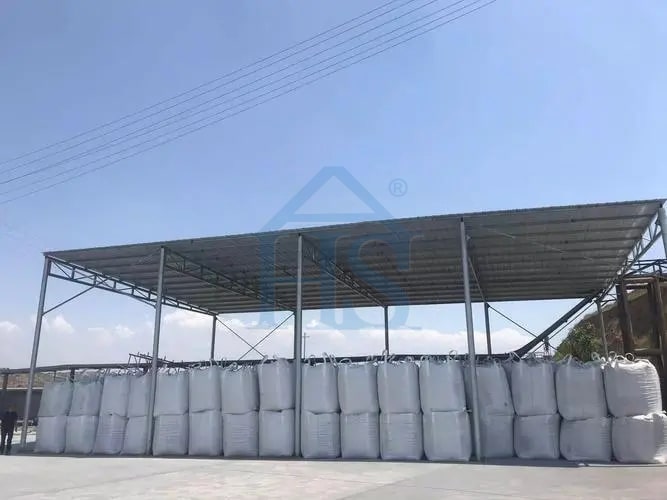
The gas containing SiO is rapidly cooled, causing the SiO to react with oxygen (O2) in the air and form silica fume, which is composed primarily of ultrafine silicon dioxide (SiO2) particles. These particles are then collected using filters or other collection systems and packed for further use.

Applications of Silica Fume
På grund af dets unikke egenskaber, silica fume finds use in various applications, herunder beton, ildfaste materialer, and others.
Silica fume is widely used as an additive in concrete to improve its strength, holdbarhed, og modstandsdygtighed over for kemiske angreb. The addition of silica fume reduces the permeability of concrete, making it less susceptible to corrosion and other forms of degradation. It also enhances the mechanical properties of concrete, including compressive strength, trækstyrke, and flexural strength.
Silica fume is an essential component in the production of refractory materials, which are used to line high-temperature furnaces, kilns, and reactors. Its high melting point and low thermal conductivity make it an ideal material for enhancing the thermal insulation and mechanical strength of refractories.
Other Applications
In addition to concrete and refractories, silica fume is used in various other applications, som f.eks:
- Maling og belægninger: It improves the anti-corrosion and weather resistance properties of paint and coating systems.
- Gummi og plast: It enhances the mechanical and thermal properties of these materials.
- Keramik: It improves the strength, hårdhed, and thermal stability of ceramic products.
- Elektronik: It is utilized as a filler in microelectronics packaging to provide improved thermal conductivity and electrical insulation.
Environmental Impacts
The production of silica fume involves the generation of carbon dioxide (CO2) as a byproduct of the furnace reaction. Imidlertid, the use of silica fume in concrete can offset these emissions by reducing the need for cement, a significant source of CO2 emissions. Desuden, recycling silica fume as a valuable material prevents it from being disposed of in landfills, thus reducing waste.