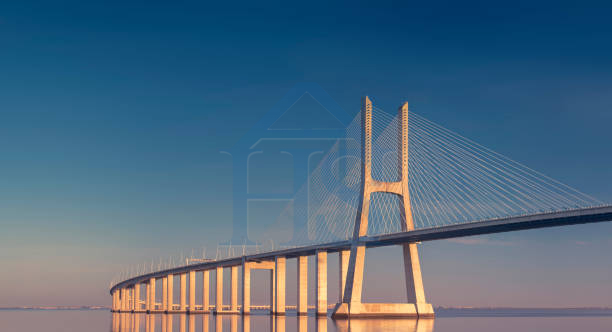
Liechtenstein may be one of the smallest sovereign states in the world, but its construction sector faces some of the toughest engineering conditions in Europe. Wedged between Switzerland and Austria in the heart of the Alps, the principality builds on steep terrain, in narrow valleys, and under a climate that swings from summer heat to deep winter frost within a single construction season. For contractors and precast producers working in Vaduz, Schaan, Triesenberg, or the mountain communities above the Rhine Valley, ordinary concrete simply does not hold up long enough. Freeze-thaw cycling, de-icing salt exposure on alpine roads, and the need for lightweight yet ultra-durable structural elements on difficult slopes have pushed local engineers toward high-performance and ultra-high-performance concrete (UHPC) — and silica fume, マイクロシリカとも呼ばれます, is the material making that shift possible.
This article looks at why Liechtenstein’s alpine building environment creates such specific technical demands, how microsilica addresses them at the microstructural level, and how HSA Microsilica supports the small but technically demanding Liechtenstein market with consistent, standards-compliant supply.
Liechtenstein’s Alpine Construction Landscape
Liechtenstein’s infrastructure sits almost entirely within a mountainous, seismically active, and climatically variable zone. 道路, retaining walls, トンネル, avalanche barriers, ブリッジ, and residential foundations are all built on or against steep alpine slopes, often with limited access for large equipment or repeated concrete deliveries. Because the country shares building practice and technical standards closely with Switzerland, most construction here follows SIA (Swiss Society of Engineers and Architects) structural codes together with the European concrete standard EN 206, implemented locally as SN EN 206. Oversight of state building planning and permitting falls to national bodies such as the Liechtenstein Office of Civil Engineering and Geoinformation, which manages the road and infrastructure network running through this demanding terrain.
The climate compounds the difficulty. Winters bring repeated freeze-thaw cycling combined with de-icing salt application on mountain roads and bridge decks — a combination that is one of the most aggressive degradation mechanisms concrete can face. その間, summer construction windows are short, meaning contractors need concrete that gains strength quickly and can be placed reliably even on inclined or vertical surfaces, such as in shotcrete applications for slope stabilization and tunnel linings. These pressures are why many alpine engineering firms across the Liechtenstein-Switzerland-Austria border region are turning to ultra-high-performance concrete (UHPC) for critical elements — and why microsilica has become a near-essential admixture rather than an optional upgrade.
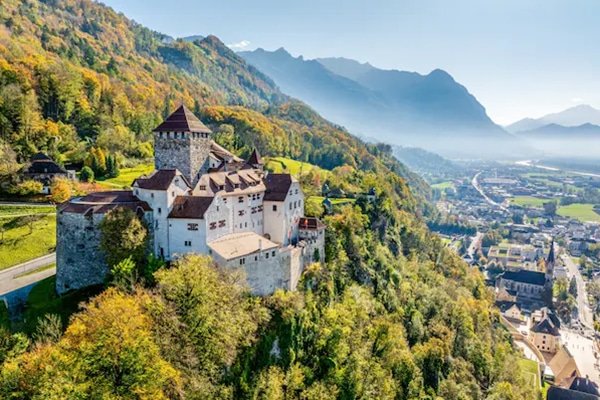
What Silica Fume Is and Why It Matters for UHPC
Silica fume is an ultra-fine, アモルファス二酸化シリコン (SiO2) byproduct captured from the off-gases of silicon and ferrosilicon smelting furnaces. Its particles are roughly 100 times smaller than average cement grains, giving it an extremely high specific surface area. When blended into a concrete or mortar mix, microsilica performs two distinct functions: a physical filler effect, where the tiny particles pack into the spaces between cement grains and aggregate, and a pozzolanic reaction, where the amorphous silica reacts with calcium hydroxide released during cement hydration to form additional calcium silicate hydrate (C-S-H) — the same binding compound responsible for concrete’s strength.
This combination densifies the microstructure of hardened cement paste far beyond what ordinary Portland cement can achieve alone, which is precisely why silica fume sits at the core of UHPC mix design. For alpine markets like Liechtenstein, where structures must resist mechanical stress, water ingress, and chemical attack from de-icing salts simultaneously, this microstructural refinement is not a marginal improvement — it is the difference between a structure lasting 25 years and one lasting well over 50.
How Microsilica Solves Alpine Construction’s Core Challenges
1. Superior Freeze-Thaw and De-Icing Salt Resistance
Because microsilica reduces capillary porosity and refines pore structure, it significantly limits the amount of water that can penetrate and freeze inside the concrete matrix. This directly addresses one of the most common causes of surface scaling and cracking on Liechtenstein’s alpine roads, ブリッジデッキ, and retaining structures, where freeze-thaw cycling combined with chloride-based de-icing salts is a near-constant seasonal stress.
2. High Early and Ultimate Compressive Strength
Short alpine building seasons mean formwork needs to be struck and structures need to bear load faster. The pozzolanic reaction accelerates strength gain in the medium term while densifying the paste for higher ultimate compressive strength, often exceeding 100 MPa in properly designed UHPC mixes — critical for slender bridge elements and structural members on constrained mountain sites.
3. Reduced Permeability and Chemical Resistance
A denser microstructure also means lower chloride ion diffusion and better resistance to sulfate and other chemical attack, which matters for foundations in contact with mineral-rich alpine groundwater and for structures exposed to road salt runoff.
4. Improved Cohesion for Shotcrete and Sloped Applications
Slope stabilization, トンネルライニング, and avalanche protection structures frequently rely on shotcrete rather than poured concrete. Microsilica improves cohesion and reduces rebound loss in shotcrete mixes, allowing thicker single-pass layers on vertical or overhead alpine surfaces without sagging.
5. Lower Long-Term Maintenance in Remote, Hard-to-Access Sites
Many alpine structures are difficult and costly to reach for repair. By extending service life and reducing the frequency of maintenance interventions, microsilica-enhanced concrete lowers the lifecycle cost of infrastructure built in Liechtenstein’s mountainous, low-accessibility terrain.
Where Alpine Projects in Liechtenstein Apply Silica Fume
| 応用 | Alpine Challenge Addressed | Typical Microsilica Grade |
|---|---|---|
| Mountain road pavements and bridge decks | Freeze-thaw cycling, de-icing salt exposure | 高密度化 92-96% SiO2 |
| Tunnel linings and rock slope shotcrete | Adhesion on vertical/overhead surfaces, low rebound | 高密度化されていない 90-94% SiO2 |
| Avalanche barriers and retaining walls | High compressive and flexural strength, 耐久性 | 高密度化 94-96% SiO2 |
| Precast structural elements for hillside buildings | High early strength, reduced curing time | 高密度化 92-94% SiO2 |
| UHPC bridge girders and thin structural panels | Ultra-high strength, 低透過性 | 高密度化 96-98% SiO2 |
| Foundation concrete in alpine groundwater | Sulfate and chemical resistance | 高密度化 92-94% SiO2 |
Best Practice Recommendations for Alpine Concrete Mix Design
- Match dosage to exposure class: For SN EN 206 exposure classes tied to freeze-thaw and chloride exposure (XF and XD classes common on alpine roads), microsilica dosage typically ranges from 5-10% of cementitious material by weight — confirm with mix trials rather than defaulting to a fixed percentage.
- Use densified silica fume for ready-mix and precast batching to reduce dust and improve handling in cold, often wet alpine site conditions, while undensified grades remain preferable for shotcrete pumping.
- Pair with high-range water reducers: Microsilica’s high surface area increases water demand; superplasticizers are essential to maintain workability without compromising the low water-cement ratio needed for durability.
- Extend curing under cold conditions: Pozzolanic reactions slow at low temperatures, so alpine sites should plan for extended or insulated curing periods during shoulder-season pours.
- Verify supplier documentation against EN 206 and BS EN 13263: Always request certificates of analysis confirming SiO2 content, 細かさ, and pozzolanic activity index — standards described in more detail in our overview of BS 1 13263 silica fume requirements, which align closely with the technical basis of the European concrete standard の 206:2013 used throughout the Liechtenstein-Switzerland construction market.
Frequently Asked Questions
Is silica fume necessary for standard residential construction in Liechtenstein, or only for infrastructure projects?
While standard residential foundations can perform adequately with conventional concrete, any structure exposed to freeze-thaw cycling, retaining walls on slopes, or foundations near alpine groundwater benefit measurably from microsilica addition, and many engineers specify it as standard practice given Liechtenstein’s climate.
How does silica fume compare with metakaolin for alpine, cold-climate applications?
Both are effective pozzolans, but silica fume generally delivers a finer particle size and greater strength gain per unit dosage, making it the preferred choice for UHPC and high-strength structural applications, while metakaolin is sometimes favored where a lighter color or lower water demand is prioritized — see our comparison of metakaolin use in European high-performance concrete.
What SiO2 grade should be specified for bridge and tunnel work in alpine conditions?
Most European infrastructure specifications for aggressive exposure classes call for densified microsilica with 92% SiO2 or higher; UHPC applications with the highest strength and durability targets often specify 94-96% SiO2 or above.
Can microsilica be sourced and shipped efficiently for a small market like Liechtenstein?
はい. Because Liechtenstein’s construction supply chains run through the broader Swiss-Austrian regional market, silica fume shipped in standard bulk bags or bulker trucks integrates easily into existing regional logistics used across Central Europe.
Does adding silica fume increase construction costs significantly?
Material cost per cubic meter rises modestly, but the reduction in long-term maintenance, repair access costs on remote alpine sites, and extended service life typically produce a lower total lifecycle cost, particularly for infrastructure in hard-to-reach mountain locations.
About HSA Microsilica
HSA Microsilica is a specialized manufacturer and global supplier of silica fume, densified and undensified microsilica, and related pozzolanic materials for the concrete, 難治性の, and construction chemicals industries. With production facilities backed by rigorous quality control and export experience across Europe, 中東, the Americas, and Asia-Pacific, HSA Microsilica supplies engineers and contractors working under EN 206, ASTM C1240, and other major international standards. Our team understands the technical demands of niche and specialized markets — from alpine infrastructure projects to tropical coastal construction — and provides full documentation, including certificates of analysis and pozzolanic activity data, with every shipment.
請負業者向け, precast producers, and engineering firms sourcing microsilica for alpine construction projects in Liechtenstein or the surrounding Swiss-Austrian region, HSA Microsilica offers both densified and undensified grades suited to ready-mix, precast, and shotcrete applications. Contact our technical sales team to discuss mix design support, bulk pricing, and shipment scheduling for your next high-performance concrete project.