Malta is a small archipelago in the central Mediterranean — three inhabited islands of which Malta itself is the largest — and a member of the European Union since 2004. Its defining geographic fact is that everything is close to the sea: the country spans only a few hundred square kilometres, yet it ranks among the most densely populated places on Earth, with roughly 1,600 people packed into every square kilometre. That concentration, together with an economy built on tourism, financial services, iGaming, and a maritime sector that includes Europe’s largest ship registry, means Malta’s most valuable concrete sits almost literally on the waterfront. Salt-laden spray, deniz suyu, and increasingly brackish groundwater attack reinforced concrete from every direction, while the island has no permanent rivers or lakes to fall back on. The additive that has become central to keeping this dense, marine-exposed built environment standing for decades is silika dumanı, mikrosilika olarak da bilinir.
This article explains why Malta’s marine climate, acute water situation, and ongoing construction boom create such specific demands for high-performance concrete, how silica fume meets those demands at the microstructural level, and how HSA Microsilica supports contractors, ready-mix producers, and engineering firms working across this fast-moving EU market.
Malta’s Coastal, Marine, and Water Landscape
Malta is defined by the sea, and by an almost total absence of surface fresh water. The islands enjoy a hot-summer Mediterranean climate, with long, dry, sun-baked summers and mild, wetter winters during which most of the annual rainfall arrives in a short, intense window. There are no rivers and no lakes of any significance, and the natural groundwater that does exist — stored in the island’s fractured limestone aquifers — has been steadily depleted and increasingly infiltrated by seawater, leaving many coastal wells brackish and unusable. The practical result is that a large share of Malta’s municipal drinking water now comes from reverse-osmosis desalination, much of it supplied by plants operated by the Water Services Corporation (WSC). Water security in Malta is, quite literally, engineered infrastructure, and that infrastructure is concrete.
Aynı zamanda, Malta’s coastline and harbours are its economic engine. The Grand Harbour and Marsamxett Harbour have anchored trade and defence for centuries, the Malta Freeport has grown into one of the Mediterranean’s busiest transhipment hubs, and a long-running construction boom has reshaped the skyline with high-rise residential and hotel towers concentrated around Sliema, St. Julian’s, and Gżira. Marinas, ferry terminals, quay walls, breakwaters, sewage outfalls, and a dense network of underground utilities all crowd the same narrow coastal band. Almost every one of these assets is made of reinforced concrete, and almost every one of them lives in the most aggressive environment concrete can face: permanent exposure to seawater, salt spray, and chloride-bearing ground.
Two further factors sharpen the durability imperative. The first is density: on Malta there is little room to build away from the sea, so structures cannot simply retreat from the aggressive zone — they must be built to live inside it. The second is the legacy of Malta’s building tradition. For centuries the islands built almost exclusively in the soft, honey-coloured Globigerina limestone quarried locally, a stone that is easy to carve but porous and relatively weak. The modern, high-density, high-rise Malta is built almost entirely in reinforced concrete, which carries far greater loads and spans — but which, unlike that traditional masonry, hides its steel reinforcement behind a cover of porous cement paste. In a hot, salt-laden atmosphere, the performance of that thin cover decides whether a structure survives for a generation or for several, which is why the specification of the concrete itself has become the central technical decision on Maltese marine and waterfront projects.
For reinforced concrete, that exposure is the slow fuse of structural decay. Chloride ions migrate through the concrete cover, reach the reinforcing steel, break down its protective oxide film, and trigger corrosion that expands the steel, cracks the cover, and spalls the surface. In Malta’s hot, humid, salt-laden air the process is accelerated, and because access for repair is often difficult and disruptive — shutting a desalination train, a ferry berth, or a waterfront tower is expensive — durability is not a design refinement but the difference between a structure that lasts and one that becomes a liability. This is precisely the problem silica fume is used to solve.
Why Coastal Concrete in Malta Needs Silica Fume
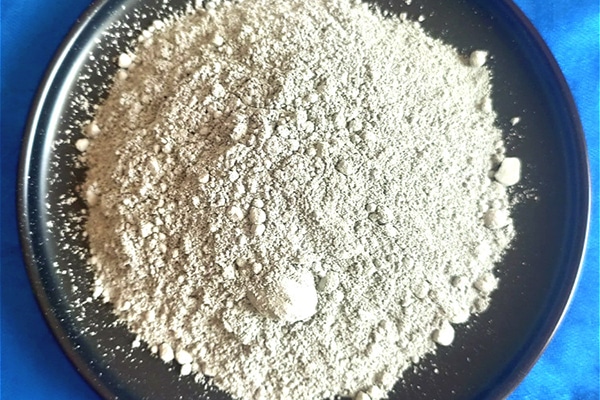
Silica fume is an ultra-fine amorphous silicon dioxide (SiO₂) recovered from the off-gases of silicon and ferrosilicon smelting. Its particles are roughly a hundred times smaller than a typical cement grain, and this extreme fineness gives it two reinforcing mechanisms in concrete. The first is a physical micro-filling effect: the tiny particles pack into the voids between cement grains and fill the space that water and aggressive ions would otherwise occupy. The second is a pozzolanic reaction: silica fume reacts with the calcium hydroxide released during cement hydration to form additional calcium silicate hydrate (C-S-H), the very compound that binds concrete together and gives it strength.
The combined effect is a hardened paste with a far finer, less interconnected capillary pore network — and therefore dramatically lower permeability. That is why silica fume is a core ingredient in ultra-high-performance concrete (UHPC), and why it is the most effective single addition a mix designer can make when the goal is to keep chlorides out of the cover zone of a marine structure. Lower permeability means slower chloride ingress, a longer time before corrosion initiates, and a longer service life for the same concrete cover — all of which translate directly into lower whole-life cost for a waterfront asset.
The magnitude of the effect is what makes silica fume indispensable rather than merely helpful. Replacing a modest share of the cement with silica fume refines the pore network so effectively that the capillary porosity of the paste drops sharply, the chloride diffusion coefficient falls by an order of magnitude or more, and the electrical resistivity of the concrete — a practical proxy for its resistance to corrosion — rises severalfold. In practical terms, a marine structure that might otherwise need a thick cover, an expensive coating, or frequent repair can often reach its design life simply by specifying a silica fume concrete with adequate, properly cured cover. It is a durable solution engineered into the mix itself, rather than bolted on afterward.
How Silica Fume Solves Malta’s Core Concrete Challenges
Malta’s concrete problems are not exotic; they are the classic marine failures, only accelerated and concentrated by geography. Silica fume attacks them at the source — in the pore structure of the hardened paste — delivering five benefits that map directly onto the island’s construction reality.
1. Chloride Resistance Against Salt Spray and Seawater
The primary threat to Malta’s coastal reinforced concrete is chloride penetration, and the primary defence is a dense, impermeable cover. By refining the pore structure of the hardened paste, silica fume sharply reduces the rate at which chloride ions migrate toward the steel. This is the single most valuable property for marine and waterfront structures in Malta, from quay walls and ferry terminals to the piles and decks of harbour infrastructure. For a fuller explanation of the mechanism, see our guide to the effect of microsilica on the durability of concrete.
2. Watertightness for Desalination and Water Infrastructure
In a country with no rivers and strained groundwater, the desalination plant, its reservoirs, intake structures, and distribution tanks are critical national infrastructure. These assets must hold back both seawater and high-pressure treated water without leaking, and must resist constant chemical attack from brine and chlorinated water. The densified paste that silica fume produces dramatically lowers permeability, producing watertight structures that resist seepage and chemical ingress over a long service life. This is the same property exploited in silica fume for waterproofing uygulamalar, and it matters acutely on an island where a single leaking reservoir represents a measurable loss of a scarce, expensive resource.
3. High Compressive Strength for High-Rise and Long-Span Structures
Malta’s waterfront towers and harbour structures need concrete that carries heavy loads while resisting a marine environment, often on sites where space is tight and wind and seismic loads govern the design. Silica fume reliably pushes compressive strength well beyond the reach of ordinary mixes, which is why it anchors yüksek dayanımlı betonda silis dumanı. Higher strength also allows slimmer columns and lighter structural members — a real advantage where land is scarce and every floor of a high-rise must justify its footprint.
4. Sulfate and Chemical Resistance Against Brackish Ground and Effluent
Malta’s coastal groundwater is increasingly saline, and many marine and wastewater structures sit in chemically aggressive ground. Sulfate attack, which gradually degrades the cement paste of foundations, yığınlar, and buried structures, is a persistent risk. Yoğun, low-permeability matrix produced by silica fume resists sulfate and chemical ingress far better than ordinary Portland-cement paste, protecting foundations, retaining walls, outfall pipes, and underground utility chambers from aggressive ground and effluent conditions.
5. Faster Turnaround for Precast Marine Elements
Quay blocks, menfezler, borular, caissons, and other marine elements are increasingly precast off-site and delivered to Malta’s congested coastal sites, where space and time are at a premium. Silica fume not only improves the final durability of these elements but also contributes high early strength that lets precasters strike moulds sooner and turn them around faster. This is the same benefit behind silica fume for precast elements, and it supports the off-site construction methods that are most practical on a small, dense island.
Where Malta Projects Are Applying Silica Fume
The following table summarises the island’s highest-value applications and the property each one leans on most. Across every row, the common thread is a concrete that must resist water, salt, and chemical attack for decades with minimal intervention.
| Başvuru | Malta Context | Key Silica Fume Benefit |
|---|---|---|
| Desalination plants, reservoirs, and intake/outfall structures | Reverse-osmosis plants supplying a large share of municipal water | Watertightness, chloride and sulfate resistance |
| Harbour quay walls, breakwaters, and ferry terminals | Grand Harbour, Marsamxett Harbour, Gozo Channel facilities | Seawater durability, düşük geçirgenlik, long life |
| Coastal high-rise residential and hotel towers | Sliema, St. Julian’s, and Gżira waterfront developments | Yüksek güç, reduced cover, chloride resistance |
| Port and transhipment structures | Malta Freeport and associated container handling areas | Abrasion and chloride resistance, dayanıklılık |
| Marinas and waterfront public works | Portomaso, Msida, and coastal reclamation schemes | Marine durability, watertightness, az bakım |
| Precast pipes, menfezler, and marine elements | Off-site precast yards supplying island projects | High early strength, faster mould turnover |
Best Practices for Specifying Silica Fume in Maltese Projects
- Dose against exposure, not just strength. In a marine environment, specify the dosage needed to hit the required chloride-permeability class first (commonly 5–10% of cementitious material by weight), then confirm compressive strength. Durability is the headline requirement, strength the supporting one.
- Match the grade to the application. Undensified silica fume disperses readily in wet-mix and ready-mix production, while densified grades suit bulk handling, lower dust, and larger batching plants. Choose the form that fits the site, the mixing equipment, and the available storage on a compact island site.
- Pair with a high-range water reducer. Silica fume’s high surface area raises water demand; a compatible superplasticizer keeps the mix workable while preserving the low water-cement ratio that chloride resistance depends on.
- Verify conformity against European standards. As an EU member, Malta applies European norms — concrete under EN 206 and silica fume under EN 13263. Request certificates of analysis covering SiO₂ content, incelik, and pozzolanic activity index, and align with the national technical and building framework administered by the Building and Construction Authority (BCA) of Malta.
- Protect the cover and cure properly. Marine structures live or die by their concrete cover to the reinforcement. Specify adequate cover, and follow marine-durability curing guidance to ensure the densified paste actually reaches its design impermeability — early, continuous moist curing is especially important in Malta’s hot, dry summers, where rapid surface drying can undermine the very durability silica fume is there to deliver.
Extending Service Life and Supporting Lower-Carbon Design
Malta’s durability challenge is inseparable from its climate commitments. As an EU member, the island is bound to the same decarbonisation trajectory as the rest of the bloc, and concrete — the world’s most-used construction material — sits at the centre of that effort because its Portland-cement binder is carbon-intensive to produce. Silica fume helps on both fronts at once. Because it is a highly reactive pozzolan, a portion of the cement clinker can be replaced by silica fume without sacrificing strength, cutting the embodied carbon of the mix. And because silica fume concrete lasts longer and needs less repair, the emissions and disruption of demolition, re-pouring, and rebuilding are pushed decades further into the future. dayanıklılık, in other words, is the cheapest form of decarbonisation available to a marine structure: the longest-lived concrete is the concrete that never has to be replaced.
On the mix-design side, the practical rule is straightforward. For marine and waterfront work, silica fume is typically dosed at 5–10% of the total cementitious material by weight, with the exact figure driven by the required chloride-permeability class and strength target rather than by habit. It should be introduced with a compatible high-range water reducer and thorough mixing so the ultra-fine particles disperse uniformly, and it must be followed by disciplined curing — early, continuous moist curing is non-negotiable in Malta’s hot, dry summers if the densified paste is to reach its design impermeability. For elements where a very low water-cement ratio and exceptional strength are called for, the same silica fume logic scales up into full UHPC formulations.
Sıkça Sorulan Sorular
Why is silica fume preferred for marine concrete in Malta?
Silica fume addresses the defining failure mode of coastal concrete — chloride-induced corrosion of the reinforcement — by physically densifying the paste and reacting pozzolanically to close off the capillary pores. Few other additions reduce chloride permeability, increase strength, and improve watertightness in a single material the way silica fume does, which is why it is the go-to addition for Malta’s marine and waterfront structures.
Is silica fume suitable for desalination plant concrete that contacts seawater and brine?
Evet. The low permeability and chemical resistance of silica fume concrete make it well suited to intake, outfall, and process structures exposed to seawater and concentrated brine, where watertightness and resistance to chloride and sulfate attack are essential over a long service life — and where any leak or shutdown carries a disproportionate cost in a water-scarce country.
How does silica fume protect reinforcing steel from chloride attack?
Silica fume refines the capillary pore structure of the hardened paste, dramatically slowing the rate at which chloride ions migrate through the concrete cover. This delays the moment when chlorides reach the steel and break down its protective oxide film, extending the time to corrosion initiation and the overall service life of the structure.
Does adding silica fume significantly raise the cost of a coastal project?
Material cost per cubic metre rises modestly, but the savings from a longer-lasting, lower-maintenance structure usually dominate over the asset’s life — especially for marine and water infrastructure where repair access is difficult, disruptive, and expensive, and where premature deterioration can threaten water supply continuity or force the shutdown of a revenue-generating harbour facility.
Can HSA Microsilica supply silica fume into Malta reliably?
Evet. Malta is a well-connected EU transhipment hub served by regular Mediterranean shipping lanes through the Freeport and the Grand Harbour area, and HSA Microsilica ships densified and undensified grades in bulk bags and containers into the region with full documentation — certificates of analysis, pozzolanic activity data, and the paperwork needed for smooth customs clearance — supporting desalination, deniz, harbour, and high-rise construction programs.
About HSA Microsilica
HSA Microsilica is a specialized manufacturer and global supplier of silica fume, densified and undensified microsilica, and related pozzolanic materials for the concrete, deniz, dayanıklı, and construction chemicals industries. With rigorous quality control and export experience across Europe, orta Doğu, the Americas, and Asia-Pacific, HSA Microsilica supports engineers and contractors working under EN 206, İÇİNDE 13263, ASTM C1240, and other international standards. Our team understands the technical demands of coastal and marine construction — from chloride resistance and waterproofing to high-strength and precast production — and provides full documentation with every shipment.
For contractors, ready-mix producers, and engineering firms sourcing silica fume for desalination, harbour, marina, or high-rise projects in Malta and the wider central Mediterranean, HSA Microsilica offers both densified and undensified grades suited to ready-mix, deniz, and precast applications. Contact our technical sales team to discuss mix design support, bulk pricing, and shipment scheduling for your next project.